Skip to content

What is link building?
How backlinks work, why they still matter, and how modern link building actually builds rankings, traffic & authority.
A simple definition of link building
Link building is the process of getting other websites to link to your site.
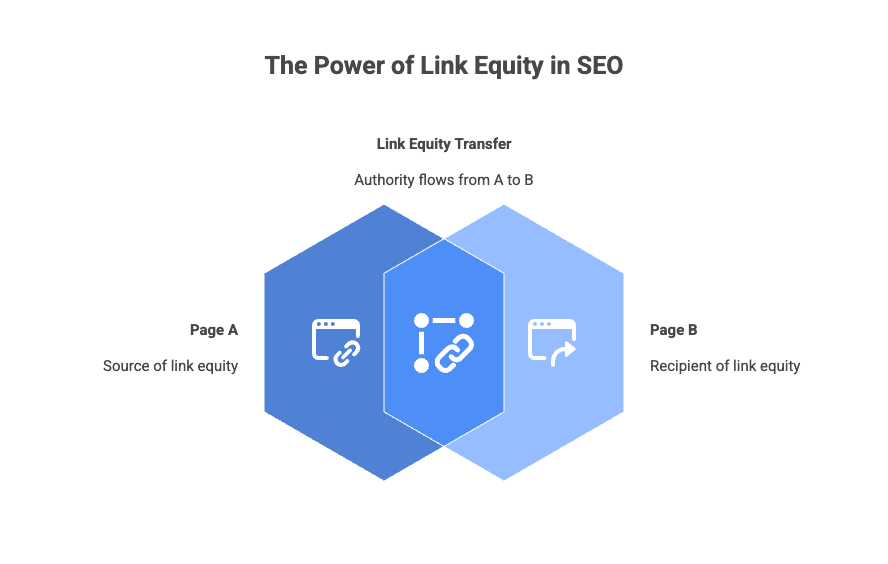
These links — called backlinks — act as signals of trust, authority and relevance. When high-quality websites link to you, Google interprets it as proof that your content is worth ranking.
Backlinks help your pages:
-
Rank higher in Google
-
Get found and crawled faster
-
Build brand authority
-
Increase organic traffic
-
Compete in tough search results
In short: content shows what you know — links show what others think of it.
How Links Work Inside Search Engines
Search engines use backlinks as a way to understand:
- Authority – If respected sites link to you, you’re likely credible
- Relevance – Links from related sites reinforce your topical expertise
- Popularity – More trusted sites linking = higher likelihood you deserve visibility
Google’s early algorithm (PageRank) was built around link evaluation. While the algorithm has evolved, backlinks remain one of the strongest ranking signals today.
Why Link Building Still Matters in 2026
Links Are Still a Core Ranking Factor
Despite AI, SGE rollouts, and more advanced ranking systems, backlinks consistently correlate with higher rankings. They help Google determine:
-
Which site is more trustworthy
-
Which content deserves page one
-
Which brands are authority leaders
There is no medium-competition SERP today where authoritative backlinks are not a major factor.
Links Strengthen E-E-A-T & Brand Authority
Backlinks contribute to:
-
Experience — experts tend to get referenced
-
Expertise — credible authors are cited
-
Authority — major sites link to authoritative voices
-
Trust — trustworthy brands get natural mentions
Good links help Google understand the entity behind your brand — an increasingly important signal in AI-powered search.
Where Link Building Fits in Your SEO Strategy
SEO has three pillars:
-
Technical — site health, indexing, site speed
-
Content — quality, depth, intent match
-
Links — external validation of authority
If your technical SEO is solid and your content is strong, but competitors outrank you, the missing piece is often authoritative backlinks.
Key Link Types & Concepts You Need to Know
Internal vs External Links
-
Internal links connect your own pages
-
External links (backlinks) come from other websites
Bear in mind that this article focuses on external links.
Follow, Nofollow, Sponsored & UGC Links
| Type | Meaning | SEO Impact |
|---|---|---|
| Nofollow | Don’t count this normally | Limited |
| Follow | Passes authority | Strongest |
| Sponsored | Indicates a paid placement | Safe when used correctly |
| UGC | User-generated content | Limited but natural |
A natural backlink profile includes all of these.
Editorial, Outreach & Self-Created Links
-
Editorial links (most valuable)
-
Outreach links (guest posts, placements)
-
Self-created links (profiles, directories)
Natural vs Manipulative Links
Google penalises manipulative patterns such as PBNs, link schemes, and unnatural anchor footprints. Sustainable link building earns or acquires links that would exist even if Google didn’t.
What Makes a High-Quality Backlink?
Relevance (Topical, Local, Audience Fit)
A relevant DR 20 link often beats an irrelevant DR 70 link. Relevance is the strongest indicator of value. Relevance at the domain level is stronger but page level relevenace will also pass some power as long as the site has some cross over to your topic.
A site about golf with a page on baking an apple pie is pointless.
Authority & Trust of the Linking Site
While metrics such as DR and DA are useful, the real signals include:
-
Real organic traffic
-
Strong, clean backlink profile
-
Editorial standards
-
No spam footprint
Link Placement, Context & Anchor Text
Best case
A link placed naturally inside a relevant page on a topical related site, using contextual descriptive anchor text.
Worst case
Sidebar widgets, footer links, boilerplate site-wide links, keyword-stuffed anchors.
Indexation & Site Health
If the linking page isn’t indexed, Google can’t see the link.
If the linking site is penalised, hacked, or deindexed, the link offers no value
High-Quality vs Low-Quality Backlinks
| Feature | High-Quality Link | Low-Quality / Toxic Link |
|---|---|---|
| Relevance | Strong topical + contextual relevance | No relevance |
| Authority | Real site with real traffic | Fake metrics, no traffic |
| Placement | In-content, editorial | Sidebar/footer/sitewide |
| Anchor Text | Natural, descriptive | Stuffed, exact match |
| Indexation | Fully indexed | Not indexed / thin content |
| Source Quality | Clean, trusted domain, real traffic | PBN, spam, AI mass content |
| Editorial Review | Manually placed within relevant content | Auto-inserted or system-generate |
Red Flags of Toxic Links
-
PBNs
-
Gambling/casino adjacency
-
Link farms
-
AI mass-generated blogs
-
Sites selling links openly
Old-School vs Modern Link Building
What Used to Work (But Doesn’t Now)
-
Article directories
-
Link wheels
-
Keyword-stuffed guest posts
-
Large-scale reciprocal linking
-
Automated link spam
- Forum signatures
Google’s Crackdown on Spammy Links
Google continues to refine spam detection via:
-
Penguin algorithm (now real-time)
-
Link Spam Update
-
Manual actions
-
AI-based pattern analysis
The message is clear: manipulative link building isn’t worth the risk.
Principles of Sustainable Link Building
-
Provide value
-
Build relationships
-
Create assets worth linking to
-
Avoid shortcuts
-
Prioritise relevance over volume
Link Building Strategies That Actually Work in 2026
Digital PR Campaigns
Earn links from:
-
News publications
-
Industry sites
-
Journalists
-
Bloggers
Digital PR increases both visibility and entity strength.
Content-Led Link Building (Linkable Assets)
Examples:
Data studies
Statistics pages
Tools
Templates
Expert guides
Check our article “How To Create A Link Building Strategy” for a deper dive.
Guest Posting (Done Right)
Still effective when:
-
Sites are relevant
-
Content is valuable
-
Placement is editorial
- Articles genuinely help audiences
Bad guest posting is just paid link placement. Good guest posting builds authority.
Collaborations & Partnerships
Link-worthy partnerships include:
-
Podcasts
-
Co-branded studies
-
Joint webinars
-
Expert roundups
-
Interviews
This is relationship-driven link building — the future-proof kind.
Link Reclamation & Unlinked Mentions
If someone mentions your brand but doesn’t link it, that’s a missed opportunity.
Reclaiming unlinked mentions has one of the highest success rates in link building.
Citations & Directories
Very useful when using the main citation aggregators and niche-specific citations. Avoid mass-submission spam services.
Measuring Link Building Success
Leading Indicators (Short Term)
-
New referring domains
-
Anchor distribution
-
Link relevance improvements
-
Indexation of newly acquired links
- Growth in website authority metrics
Lagging Indicators (Long Term)
-
Improved keyword rankings
-
Increased organic visibility
-
Higher organic traffic
-
Increased brand searches
-
More conversions and sales
Link building takes time, but is compounding
Tools to Track Link Building Performance
-
Semrush
-
Moz
-
Majestic
-
Google Search Console
-
Google Analytics
Each measures a different part of link performance.
How Long Does Link Building Take?
Link building is often an ongoing strategy,if you stop and your competitors don’t then expect to see them pass you but typical timelines to ensure success would look something like:
-
Low competition: 1–3 months
-
Medium competition: 3–6 months
-
High competition: 6–18 months
SEO compounds — the more authority you build, the faster future links work.
Link Building Risks, Penalties & Staying Safe
Google’s Link Spam Policies (Plain English)
Google penalises links intended solely to manipulate rankings.
Examples include:
-
Buying links without “sponsored” tags
-
Large-scale guest posting for anchor text
-
PBN links
-
Automated link building
-
Excessive exact-match anchors
Patterns That Trigger Problems
-
Unnatural spikes in backlinks
-
Dozens of identical anchors
-
Obvious paid placements
-
Links from low-trust niches
-
Massive sitewide linking
Google detects patterns better than individual links.
When to Use the Disavow Tool
Use only when:
-
You have a manual action
-
You inherited toxic links
-
You’ve been hit by negative SEO
Most sites never need disavow.
Building a Risk-Aware Link Strategy
-
Avoid shortcuts
-
Use editorial relevance
-
Keep a natural mix of link types
-
Monitor monthly
Link Building in an AI Search / SGE World
Links & AI Overviews
Pages shown in AI Overviews tend to:
AI-powered search still relies on:
-
Authoritative sources
-
Strong entities
-
Verified brands
-
Trusted citations
-
High-quality publications
Backlinks feed all of these signals.
Entity Signals & Brand Authority
Modern SEO depends heavily on:
Modern SEO isn’t just about pages — it’s about brands.
Links contribute to:
-
Knowledge graph development
-
Brand associations
-
Semantic relationships
-
Digital identity
Digital PR is now as much about entity building as link acquisition.
Future-Proofing Your Link Building
A simple rule:
Would this link still have value even if Google didn’t exist?
Phil Roskams (The Link Bulder) Tweet
Should You Do Link Building Yourself or Hire an Agency?
When DIY Makes Sense
-
You have time
-
You have writing skills
-
You’re in a low-competition industry
-
You don’t have a budget
- You understand best practices for link builsing
When to Hire Specialists
-
Competitive markets
-
High-growth goals
-
No internal resources
-
Need predictable monthly links
-
Want quality control + systems
How to Choose a Good Link Building Agency
Look for:
-
Transparent processes
-
Real examples of placements
-
Focus on multiple metrics not just DR or DA
-
Ethical practices
-
Reporting on every link
-
Strong editorial quality
Red flags:
-
Guaranteed metrics
-
Selling “DA 50+ links”
-
PBNs
-
No transparency
-
Cheap packages with 10 links for $1000
Key Takeaways: The Principles of Effective Link Building
-
Links are still essential in 2025
-
Quality > quantity every time
-
Relevance is the real ranking power
-
Sustainable link building = real marketing
-
Authority compounds — the more you build, the easier rankings come
-
Shortcuts are what get sites penalised
-
The goal isn’t links — it’s trust, visibility and brand authority